Coating a sound roof instead of tearing it off
A reflective coating can add years to a flat or metal roof that is aging but still dry and attached. It cannot rescue a roof that is wet underneath. The inspection tells you which one you have.
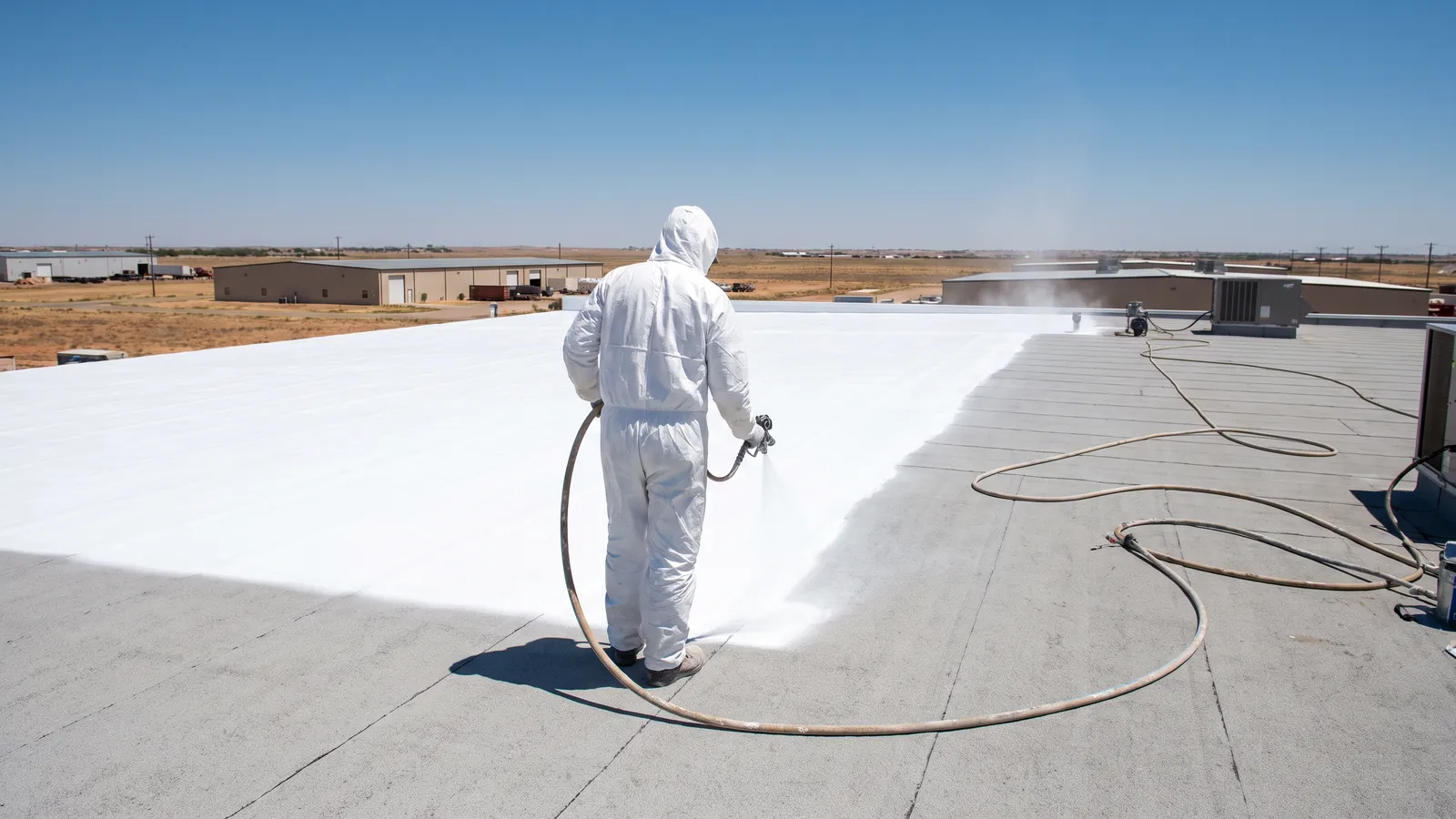
Coatings are a restoration, not a cure. On a metal roof with rust starting at the screws and seams, or a flat roof whose membrane is chalky and crazed but still attached and dry underneath, a fluid-applied coating seals the surface, covers the fasteners and seams, and adds a bright reflective layer. Under the West Texas sun that reflection matters: a white roof stays far cooler on a summer afternoon than a dark one, which is easier on the roof and on the building below it.
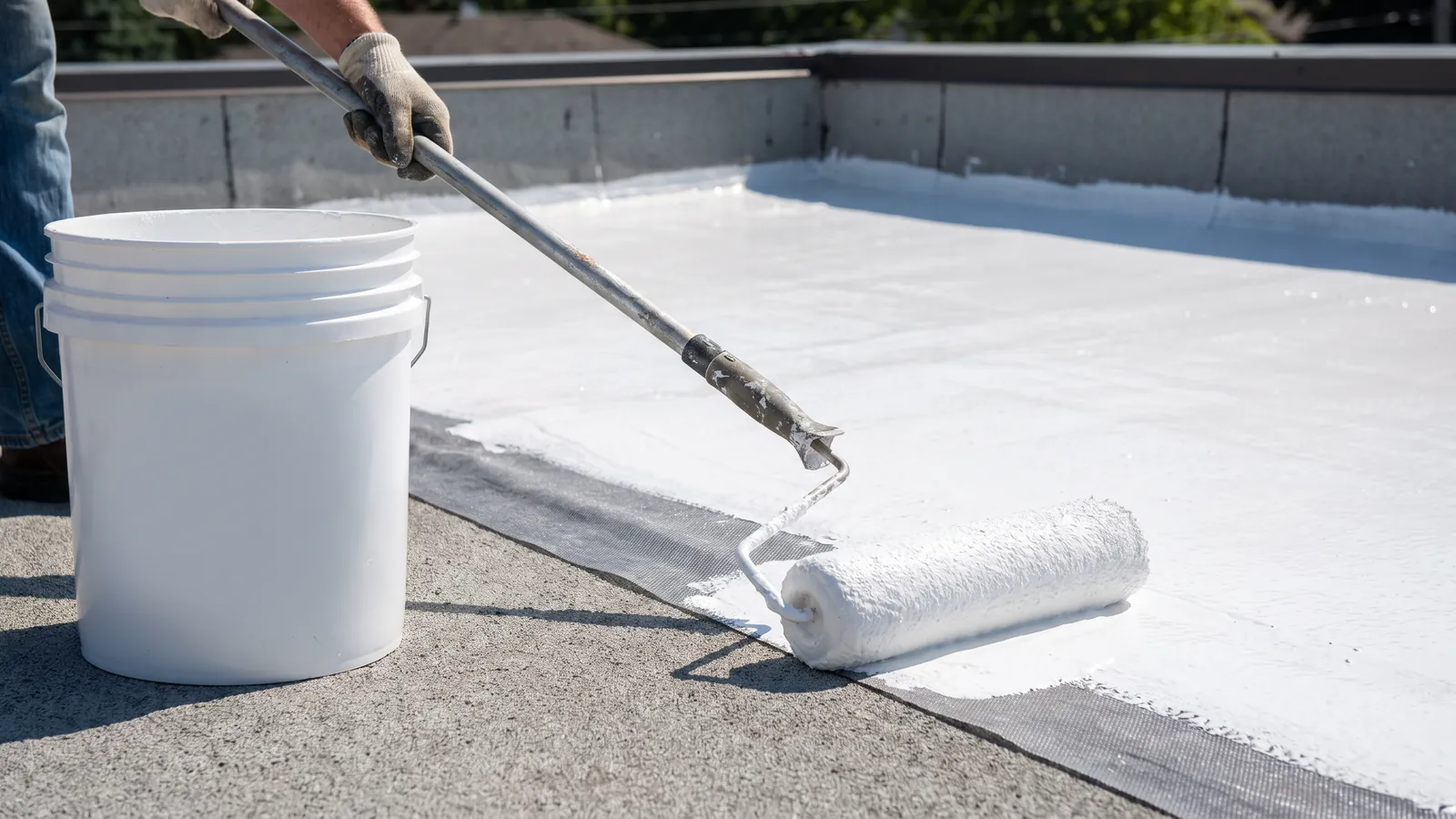
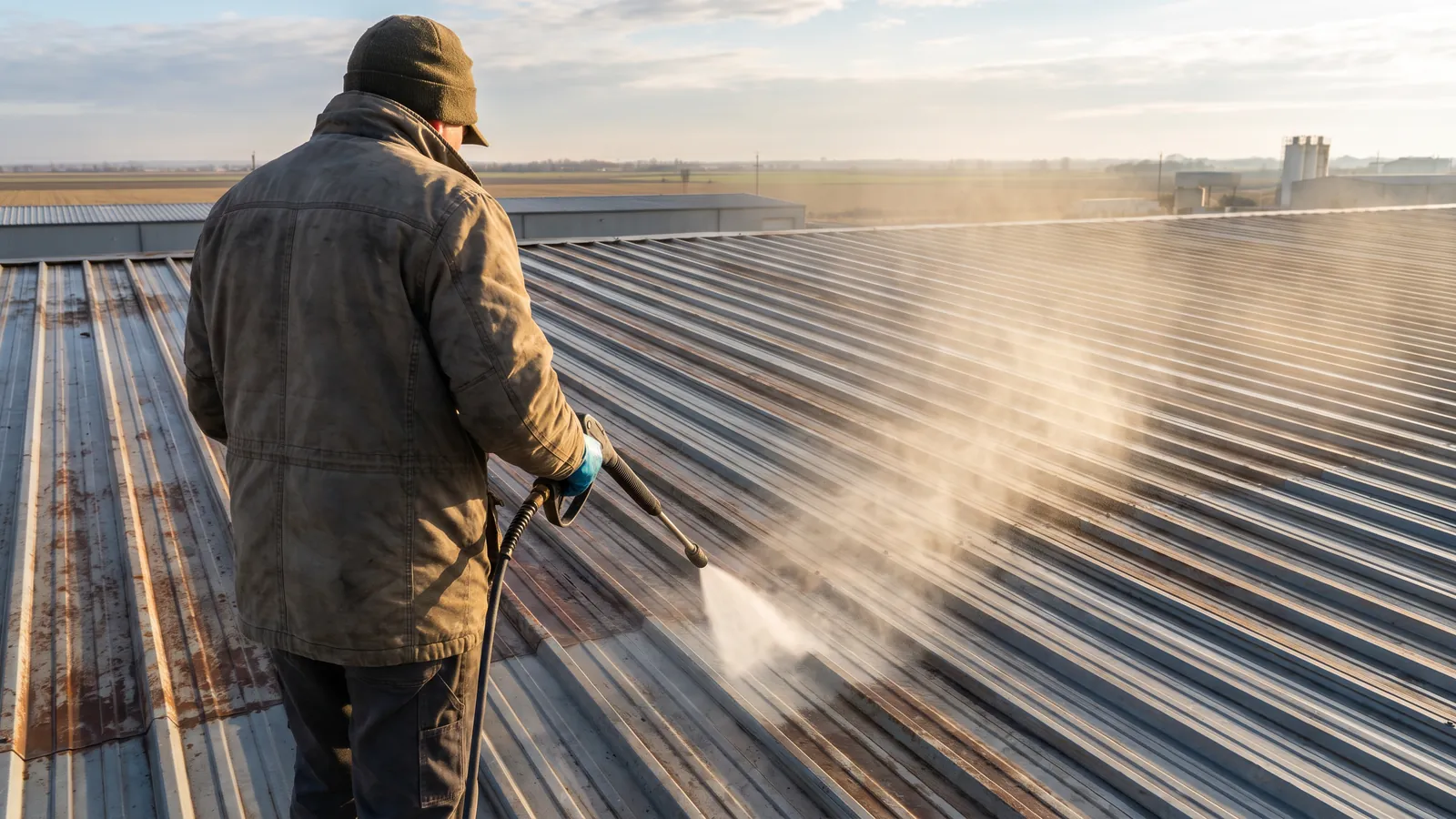
The work is mostly preparation. The roof is pressure-washed to remove dust, chalking and loose material; rusted areas on metal are treated; loose screws are replaced or tightened; and every seam, fastener line and penetration is reinforced with fabric or a mastic before the main coat. Then the coating is sprayed or rolled to the specified thickness. Silicone handles ponding water best and is the usual choice on flat roofs; acrylic elastomeric is a good value on sloped metal that drains well.
A coating is the wrong answer when the roof is wet underneath. Trapped moisture in insulation or under a membrane will blister and fail any coating, so the inspection checks for soft spots and, on larger roofs, moisture readings. When the roof is not a good candidate, the estimate says so and prices the repair or replacement instead.
What the job covers
Moisture check first
Soft spots probed and wet areas found before anyone recommends a coating.
Pressure-wash and prep
Dust, chalking and loose material removed; rust treated on metal roofs.
Fasteners and seams reinforced
Screws tightened or replaced, seams and fastener lines covered with fabric or mastic.
Silicone or acrylic
Silicone for flat roofs that pond, acrylic elastomeric for sloped metal that drains.
Specified thickness
Applied to the coating maker's thickness, checked with a wet-film gauge as it goes.
Reflective finish
A white surface that stays much cooler in the sun than a dark roof.
Roof coating prices in Lubbock
| Work | 2026 range | What moves it |
|---|---|---|
| Silicone coating, flat roof | $3 – $5.50 per sq ft | Prep, seam work, thickness |
| Acrylic elastomeric on metal | $2 – $4 per sq ft | Rust treatment, fastener work |
| Fastener replacement on metal before coating | $0.75 – $1.75 per sq ft | Screw count |
| Small residential flat roof, coated | $1,200 – $3,500 | Size, condition, access |
Budgeting ranges for Lubbock County in 2026, not quotes. Your price comes on a written estimate after a roofer has been on the roof, and nothing is scheduled until you approve it.
On the job
Roof coating: common questions
How long does a roof coating last?
Commonly 10 to 15 years depending on thickness and type, and many can be recoated later instead of replacing the roof.
Can you coat a shingle roof?
We do not recommend coating asphalt shingles. Coatings are for flat roofs and metal roofs.
Will a coating stop my leak?
If the leak is at a seam or fastener that the coating reinforces, yes. If the roof is wet underneath, no; that needs repair first.
Does a white coating lower cooling costs?
A reflective roof stays much cooler in the sun, which can reduce heat gain into the building, especially where there is little insulation. Savings vary by building.
Is a coating cheaper than a new roof?
Usually much cheaper, which is why it is worth checking whether your roof is a candidate.
Related: Flat roofing · Metal roofing · Commercial roofing