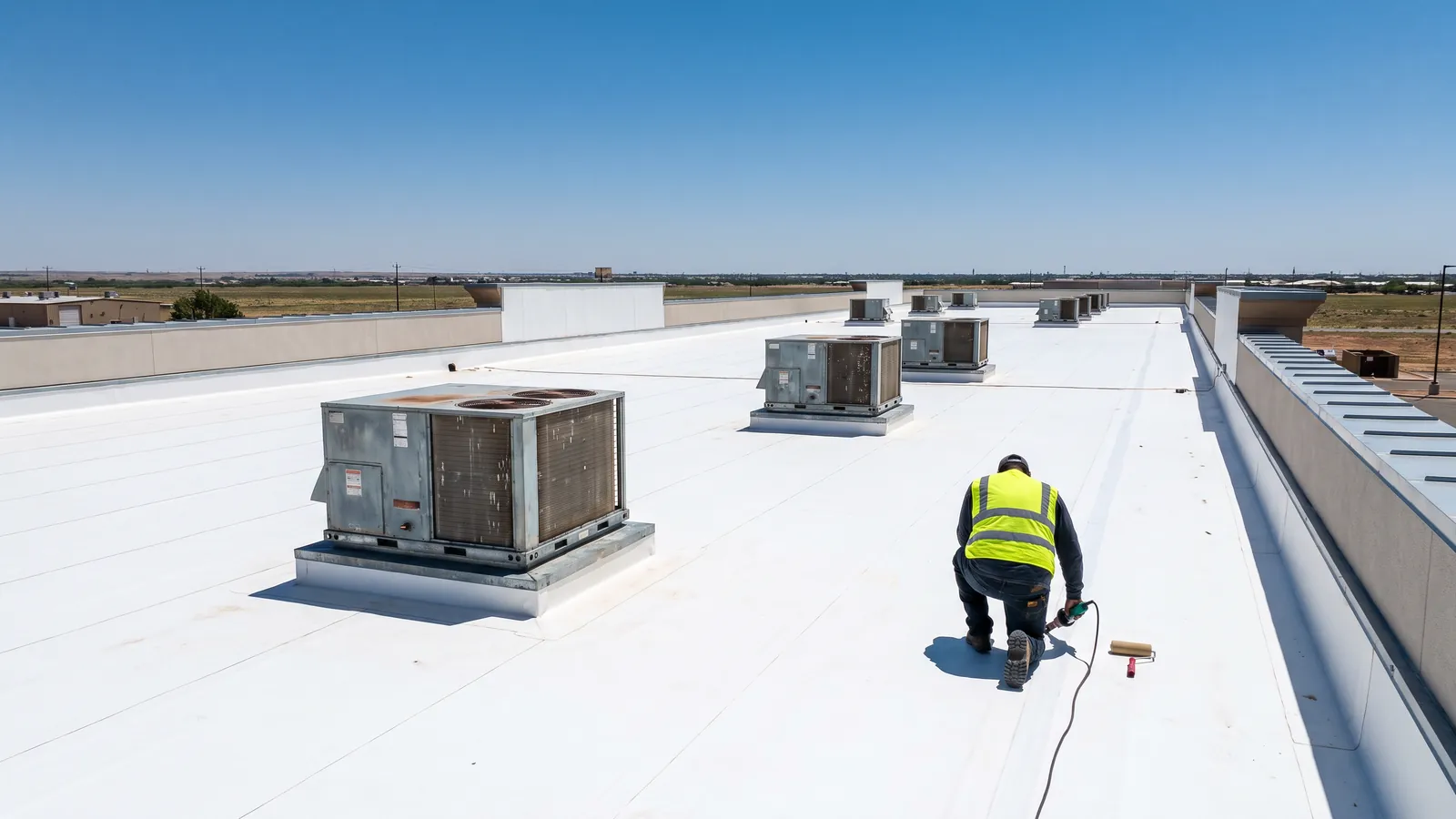
Flat and low-slope roofs, from a porch addition to a strip center
A flat roof is never truly flat; it has to slope enough to drain. Most of the problems we see on low-slope roofs in Lubbock start with water that sits, seams that open in the heat, and flashing at the walls that has let go.
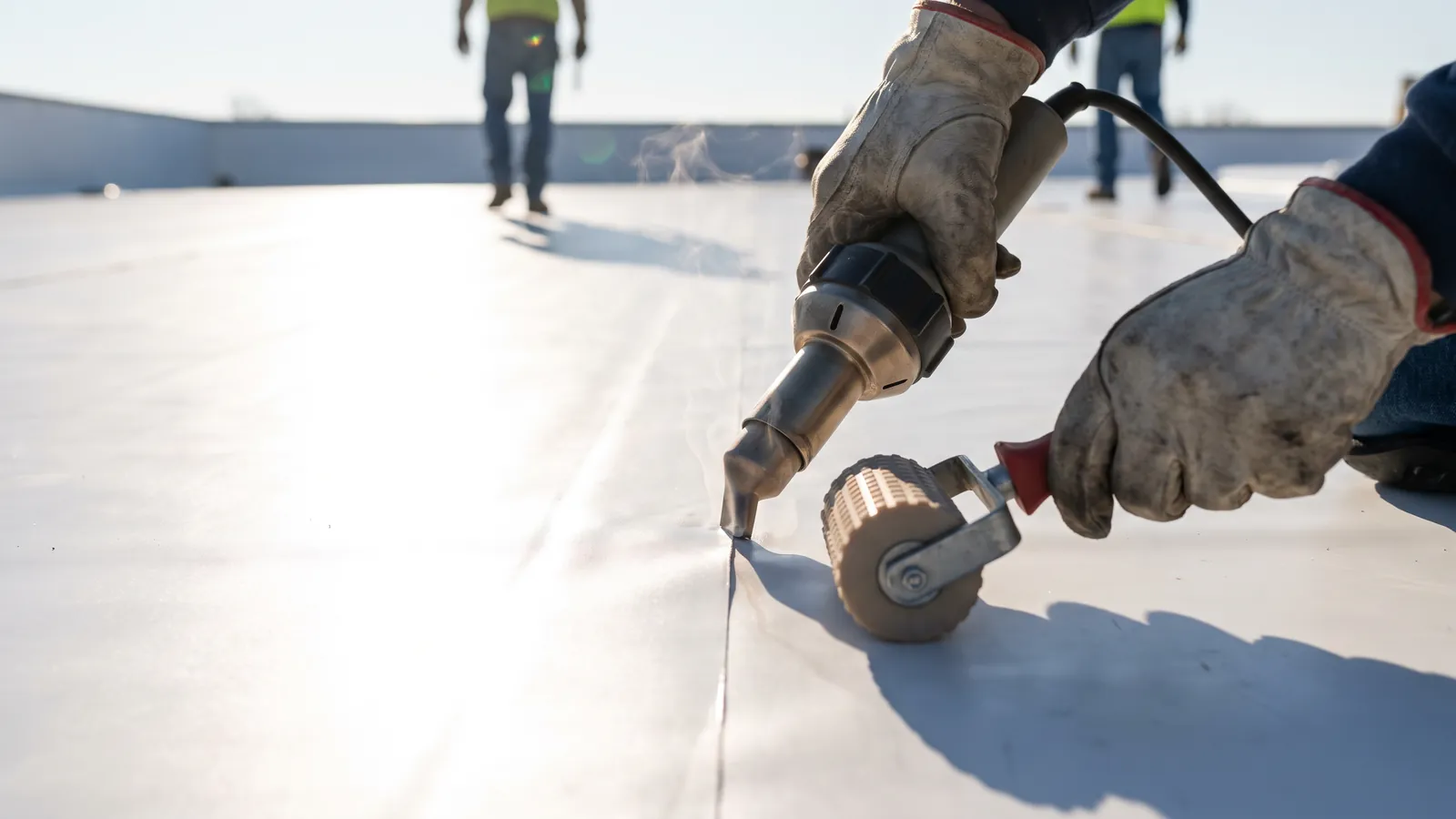
Low-slope roofs are everywhere in Lubbock: the porch and den additions on 1960s ranch houses, mid-century homes with nearly flat roofs, garages, and nearly every small commercial building along the main avenues. Three systems cover most of them. TPO is a white single-ply membrane with heat-welded seams that reflects the summer sun. Modified bitumen is a rolled, granulated asphalt membrane, torched or self-adhered, that holds up well to foot traffic. And older built-up tar-and-gravel roofs still turn up on older buildings, usually near the end of their life.
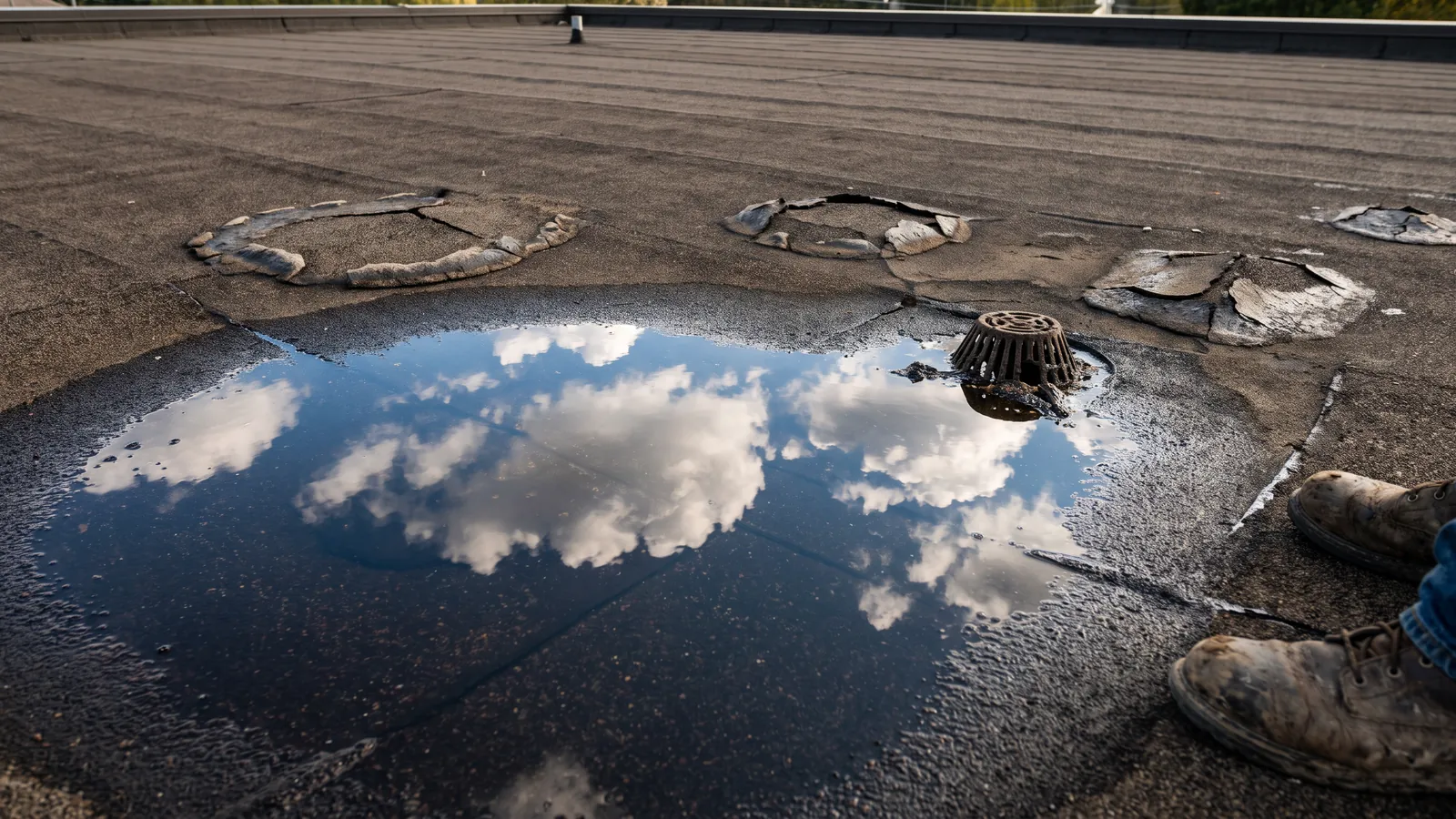
The typical failures follow the climate. Ponding water sits for days after a storm where the deck has sagged or a drain is partly blocked with blown dust, and standing water ages any membrane fast. Seams and laps open as the roof expands and shrinks through 50- and 60-degree daily temperature swings. Wall and parapet flashing lets go, and water runs down the inside of the wall. And blisters form where moisture got trapped under an older membrane.
A repair might be a welded patch, re-flashing a wall, adding a cricket to move water off a ponding area, or clearing and re-sealing a drain. When the membrane is worn out across the roof, replacement means removing it, adding tapered insulation where the slope is poor, and installing new TPO or modified bitumen with new edge metal and flashings. For sound roofs that are just aging, a coating can be the cheaper path.
What the job covers
TPO installation and repair
White membrane with hot-air-welded seams, for homes and small buildings that want a reflective roof.
Modified bitumen
Granulated rolled roofing for porches, additions and roofs that see foot traffic.
Ponding fixes
Crickets, tapered insulation and drain work so water leaves the roof within a day or two.
Wall and parapet flashing
Membrane turned up and terminated properly where the roof meets a wall or parapet.
Drains and scuppers
Blown dust and debris cleared, drain rings re-sealed, scuppers re-flashed.
Coating when it fits
A sound roof with years left can often be coated instead of replaced; we say which.
Flat roofing prices in Lubbock
| Work | 2026 range | What moves it |
|---|---|---|
| Flat roof repair, one area | $400 – $1,500 | Membrane type, flashing involved |
| TPO replacement, residential section | $7 – $11 per sq ft | Tear-off, insulation, edges |
| Modified bitumen replacement | $6 – $10 per sq ft | Torch or self-adhered, layers |
| Tapered insulation or cricket | $1,000 – $3,500 | Area needing slope |
| Drain or scupper re-flash | $300 – $800 each | Access, drain type |
Budgeting ranges for Lubbock County in 2026, not quotes. Your price comes on a written estimate after a roofer has been on the roof, and nothing is scheduled until you approve it.
On the job
Flat roofing: common questions
Why does water sit on my flat roof?
Usually a sagging section of deck, a slope that was never quite enough, or a drain partly blocked by blown dust and debris. Water that stays more than 48 hours after a storm is worth fixing.
TPO or modified bitumen for my porch?
TPO for a reflective, low-maintenance roof; modified bitumen if people walk on it or it is shaded and you prefer a granulated surface. We price both.
Can a flat roof be coated instead of replaced?
If the membrane is still attached and the insulation under it is dry, often yes. A wet or blistered roof should be replaced.
Do flat roofs need a permit in Lubbock?
A replacement generally does, like any reroof, and the contractor pulls it. Small repairs generally do not.
How long does a TPO roof last here?
A properly installed TPO roof commonly lasts 15 to 25 years depending on thickness, sun exposure and maintenance. Keeping drains clear helps a lot.
Related: Commercial roofing · Roof coating · Roof repair