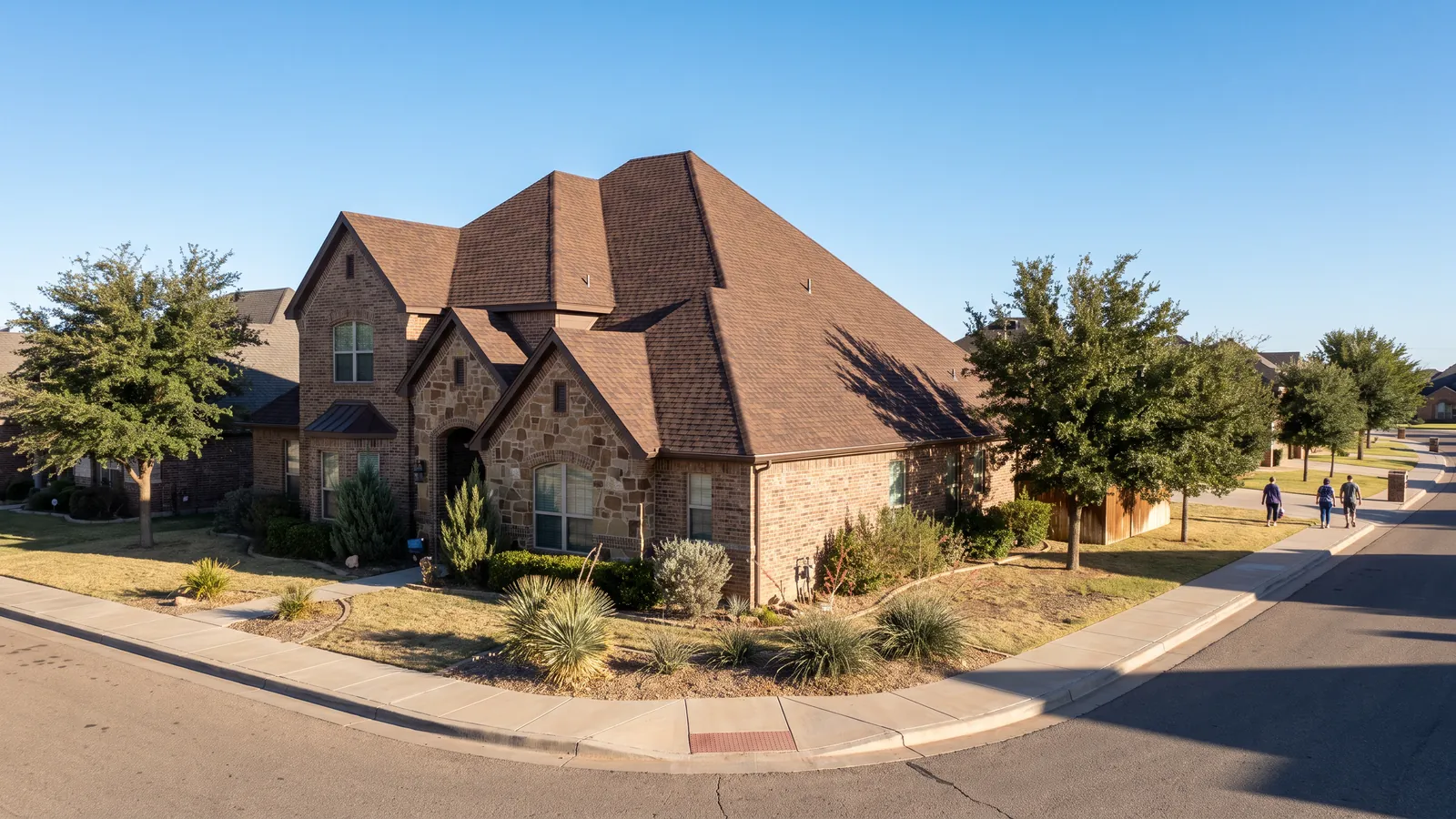
Class 4 shingles: the upgrade built for hail country
An impact-resistant shingle is tested by dropping steel balls on it. Class 4, the top rating, means a two-inch ball dropped twice in the same spot did not crack it. Nothing is hail-proof, but on the South Plains this is the shingle many owners choose.
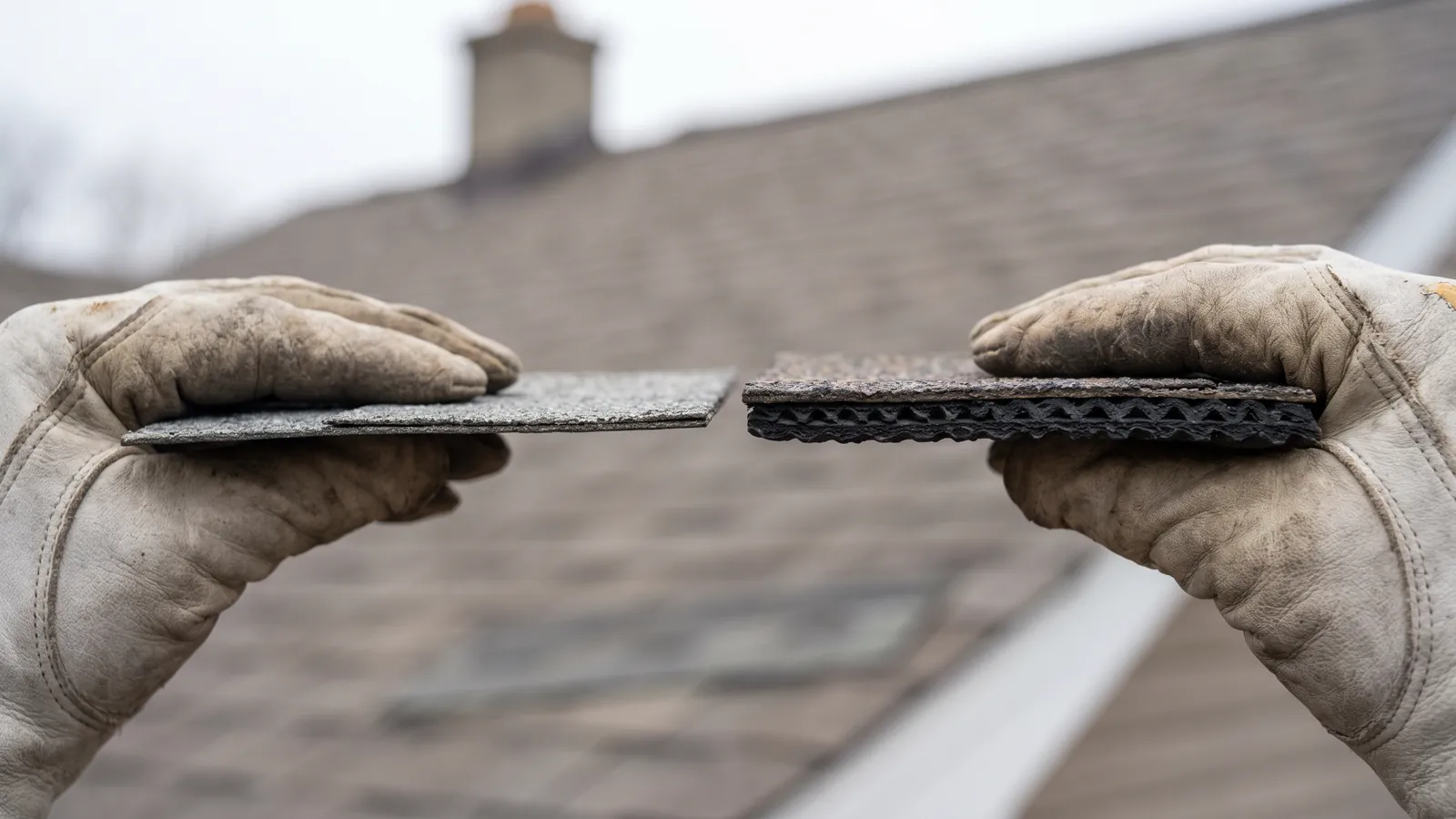
The rating comes from UL 2218, a laboratory test in which steel balls from 1¼ to 2 inches across are dropped from set heights onto a shingle installed on a test deck. A shingle earns Class 4 when the largest ball, dropped twice on the same spot, leaves no crack visible on the front or back. Most Class 4 asphalt shingles get there with a rubberized (SBS-modified) asphalt that flexes instead of fracturing, or with a reinforced mat; you can feel the difference when you bend one.
That does not make a roof hail-proof. Very large hail still damages Class 4 shingles, granules still wear, and dents in vents and gutters still happen. What the rating does is raise the threshold: storms that would bruise a standard architectural shingle across every slope often leave a Class 4 roof with cosmetic marks or nothing at all. In a city that averages several significant hailstorms a year, that difference adds up over a roof's life.
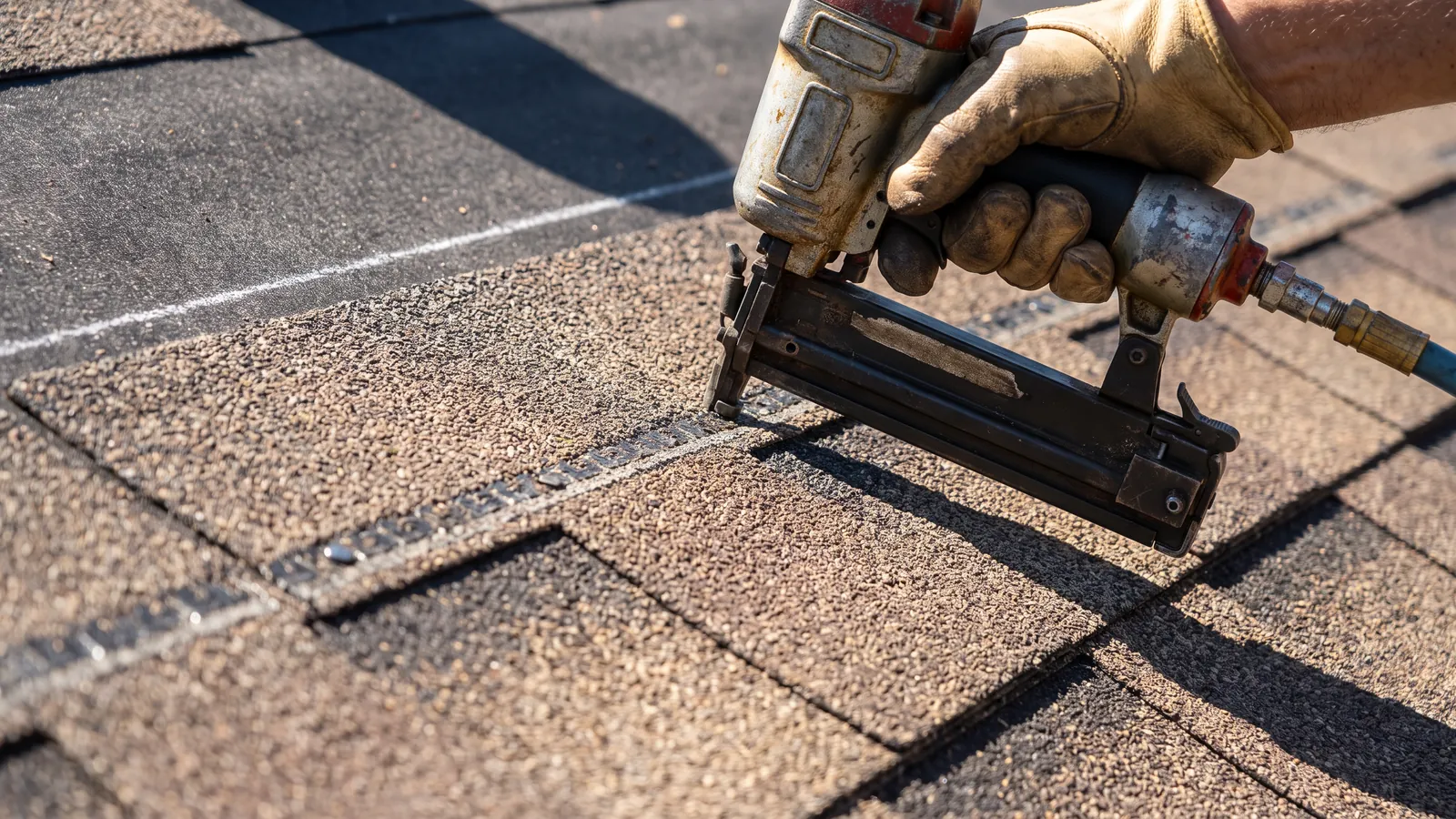
Some Texas insurers offer a premium credit for a roof with Class 4 shingles, and the size varies a great deal by company and policy. Call your agent before you choose, ask what documentation they want, and we will provide the shingle's rating and the installation details on the invoice. Installation matters as much as the label: the shingle has to be nailed to the manufacturer's pattern, with matching impact-rated hip and ridge, over a sound deck, or the rating means less than it should.
What the job covers
UL 2218 Class 4
The highest impact rating in the standard steel-ball test; the shingle line and rating appear on your paperwork.
Flexible asphalt
Most lines use SBS-modified asphalt or a reinforced mat that bends rather than fracturing under a strike.
Matching hip and ridge
Impact-rated cap shingles so the ridge is not the weak point on the roof.
Manufacturer's nailing pattern
High-wind nailing and starter strip installed to the shingle maker's instructions.
Paperwork for your insurer
Invoice lists the shingle line and rating; ask your agent what else they want to see.
Honest expectations
Fewer bruised shingles in typical storms, not immunity; vents and gutters can still dent.
Impact-resistant shingles prices in Lubbock
| Work | 2026 range | What moves it |
|---|---|---|
| Class 4 shingle roof, 24–32 squares, tear-off included | $12,000 – $21,000 | Shingle line, pitch, decking |
| Upgrade over a standard architectural shingle | +10% – 25% | Line chosen, accessories |
| Impact-rated hip and ridge | $5 – $9 per foot | Ridge length |
| Two-story or steep home | add 10% – 25% | Access and safety setup |
Budgeting ranges for Lubbock County in 2026, not quotes. Your price comes on a written estimate after a roofer has been on the roof, and nothing is scheduled until you approve it.
On the job
Impact-resistant shingles: common questions
Are Class 4 shingles hail-proof?
No. Nothing on a roof is hail-proof. Class 4 shingles resist the impacts that bruise standard shingles, so ordinary storms often leave them undamaged, but very large hail can still break them.
Will Class 4 shingles lower my insurance?
Some Texas insurers offer a credit and some do not, and the amount varies. Ask your agent before choosing, and ask exactly what proof they need.
Do they look different?
Not really. They come in the same dimensional profiles and colors as standard architectural shingles. They are a little heavier and noticeably more flexible.
Can I add them to part of my roof?
Mixing shingle lines on one roof is not recommended and would not earn an insurance credit. Class 4 makes sense as a full replacement.
How long do they last in Lubbock?
The sun is hard on any asphalt shingle at this elevation. A Class 4 line typically lasts at least as long as a standard architectural shingle, often longer, mainly because it survives the storms that would end a standard roof early.
Related: Roof replacement · Hail damage · Replacement cost